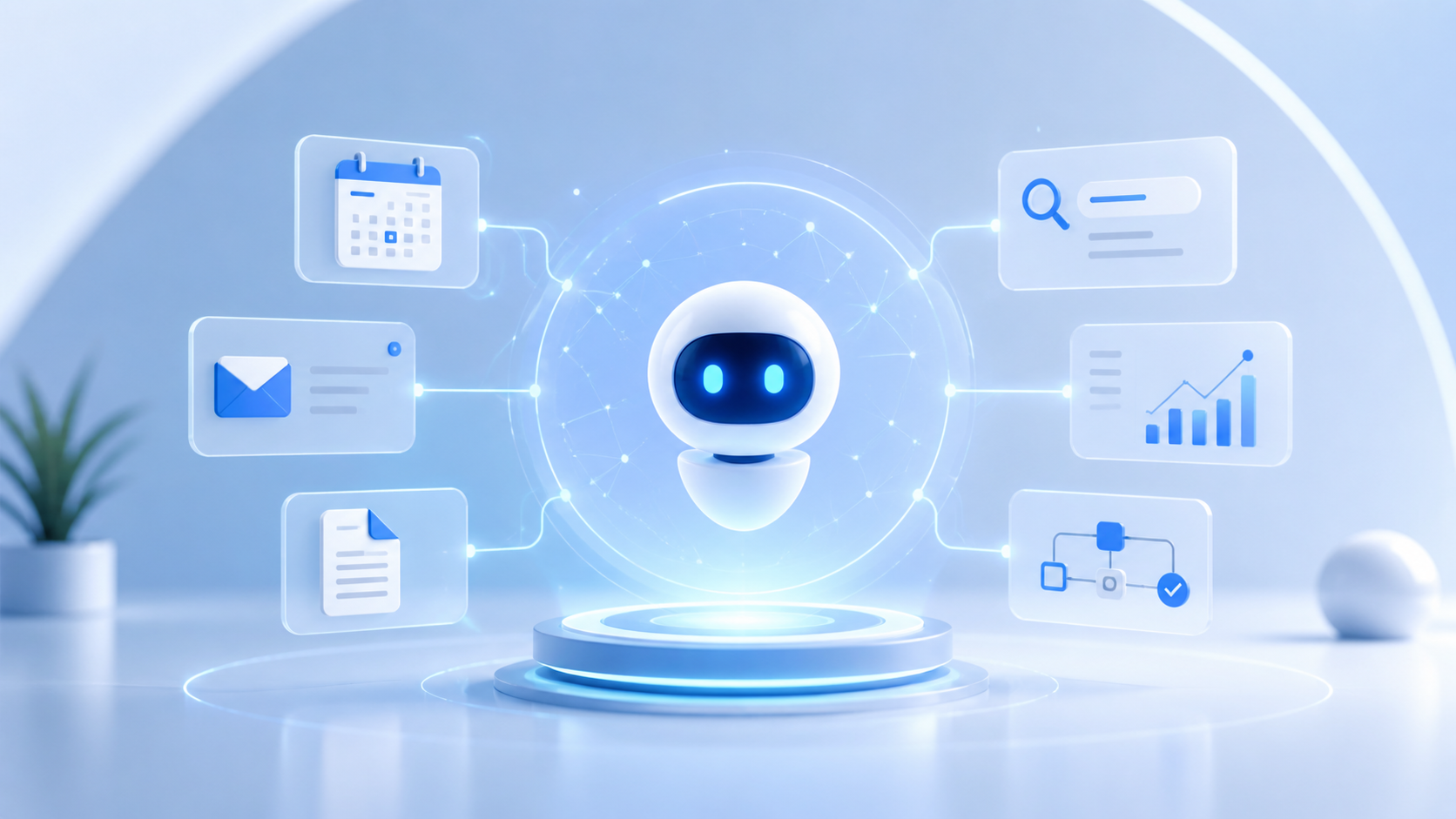
Artificial intelligence is moving fast, and one term you may hear more often now is AI agent. Many people already know about chatbots like ChatGPT, Gemini, or Copilot. You ask a question, and they reply. But AI agents go one step further. They are designed not only to answer questions but also to take action, make decisions, and complete tasks with less human help.
In simple words, an AI agent is a smart software system that can understand a goal, plan what needs to be done, use tools, and work through steps to finish the task. For example, instead of only telling you how to book a hotel, an AI agent could compare hotels, check prices, prepare options, and maybe even help complete the booking if it has permission.
AI agents are becoming important because they can save time, reduce repetitive work, and help people manage tasks more easily. They are already being used in customer support, business automation, software development, marketing, research, and personal productivity.
What Is An AI Agent?
An AI agent is a computer program that can think through a task and act on behalf of a user. It uses artificial intelligence to understand instructions, make decisions, and complete actions.
A normal chatbot usually waits for your message and then gives a response. An AI agent can continue working toward a goal. It may search for information, open apps, read documents, send messages, create reports, or connect with other software tools.
For example, if you tell a normal chatbot, “Help me plan a trip,” it may give you travel suggestions. But an AI agent could create a full travel plan, compare flights, check hotel options, make a budget, and organize everything into a schedule.
How Do AI Agents Work?
AI agents usually work in a few simple steps. First, they understand the user’s goal. Then they break that goal into smaller tasks. After that, they decide what tools or information they need. Finally, they complete the task and improve the result if needed.
For example, imagine you ask an AI agent to prepare a weekly social media plan. The agent may first understand your business type. Then it may research trending topics, create post ideas, write captions, suggest hashtags, and organize everything in a calendar.
The agent may also ask for your approval before taking important actions. This is useful because not every task should be fully automatic. Human control is still important, especially when the task involves money, private data, or public communication.
AI Agent Vs Chatbot: What Is The Difference?
A chatbot mainly talks with users. It answers questions, explains topics, writes content, or gives suggestions. It is useful, but it usually depends on the user to guide every step.
An AI agent is more action-focused. It can plan, decide, and use tools to finish a task. It not only replies with information; it can work through a process.
For example, a chatbot can explain how to clean your email inbox. An AI agent could actually scan your emails, find newsletters, sort important messages, and help archive unwanted emails if you give permission.
That is the biggest difference: a chatbot responds, while an AI agent can act.
Simple Examples Of AI Agents
AI agents can be used in many everyday situations. Some examples include:
- A customer support agent who answers questions and solves simple problems
- A research agent that finds information and summarizes it
- A writing agent that creates blog drafts, emails, and reports
- A coding agent that helps developers fix bugs or build features
- A business agent who updates spreadsheets and prepares summaries
- A personal assistant agent that manages schedules, reminders, and tasks
- A shopping agent that compares products and prices
- A security agent that monitors threats and alerts teams
These examples show why AI agents are becoming popular. They can handle boring, repetitive, and time-consuming work.
Why Are AI Agents Becoming Popular?
AI agents are becoming popular because people want tools that do more than answer questions. Businesses want automation. Workers want productivity. Developers want faster coding support. Customers want quick service. AI agents can help in all these areas.
Another reason is that modern AI models are getting better at understanding language, following instructions, and working with different tools. This makes AI agents more useful than older automation systems.
Traditional automation follows fixed rules. AI agents can be more flexible. They can understand natural language and adjust their actions based on the situation.
Where Can AI Agents Be Used?
AI agents can be used in almost every industry. In business, they can help with reports, customer service, sales follow-ups, and document management. In education, they can help students learn, summarize lessons, and create study plans.
In healthcare, AI agents may help with appointment scheduling, patient support, and medical paperwork. In cybersecurity, they can help detect suspicious activity and alert security teams. In software development, they can assist with writing code, testing, and debugging.
For content creators and bloggers, AI agents can help with topic research, SEO planning, headline ideas, image prompts, and content calendars.
Benefits Of AI Agents
AI agents can make work faster and easier. They can reduce manual tasks and help people focus on more important decisions.
Some major benefits include:
- They save time by handling repeated tasks
- They can work across different tools and apps
- They can help businesses reduce workload
- They can improve customer support
- They can organize information quickly
- They can help users make better decisions
- They can increase productivity for teams and individuals
For small businesses, AI agents can be especially useful because they can perform tasks that normally require extra staff or many hours of work.
Risks And Limitations Of AI Agents
AI agents are useful, but they are not perfect. They can make mistakes, misunderstand instructions, or use incorrect information. This is why human review is still very important.
Another concern is privacy. AI agents may need access to emails, files, calendars, or business tools to complete tasks. Users should be careful about what permissions they give.
There is also a risk of over-automation. Some decisions should not be made by AI alone, especially decisions involving money, legal matters, health, security, or personal data.
AI agents should be treated as helpful assistants, not as fully independent experts.
Are AI Agents Safe To Use?
AI agents can be safe if they are used carefully. The most important thing is to control what they can access and what actions they can take.
For example, it is safer to let an AI agent draft an email than to let it send emails automatically without approval. It is safer to let it suggest a financial report than to let it move money or approve payments.
Users should always check the output, especially when the task is important. Businesses should also set clear rules, permissions, and monitoring systems before using AI agents at scale.

AI agents are one of the biggest changes happening in artificial intelligence. They are different from normal chatbots because they can plan, use tools, and take action to complete tasks.
If this article helped you, please consider supporting our work. Every small contribution keeps Abijita.com independent and running.

For beginners, the easiest way to understand AI agents is this: a chatbot gives answers, but an AI agent helps get things done.
As the technology improves, AI agents will become more useful in business, education, cybersecurity, content creation, and everyday life. But like every powerful tool, they should be used carefully, with human control and proper privacy protection.