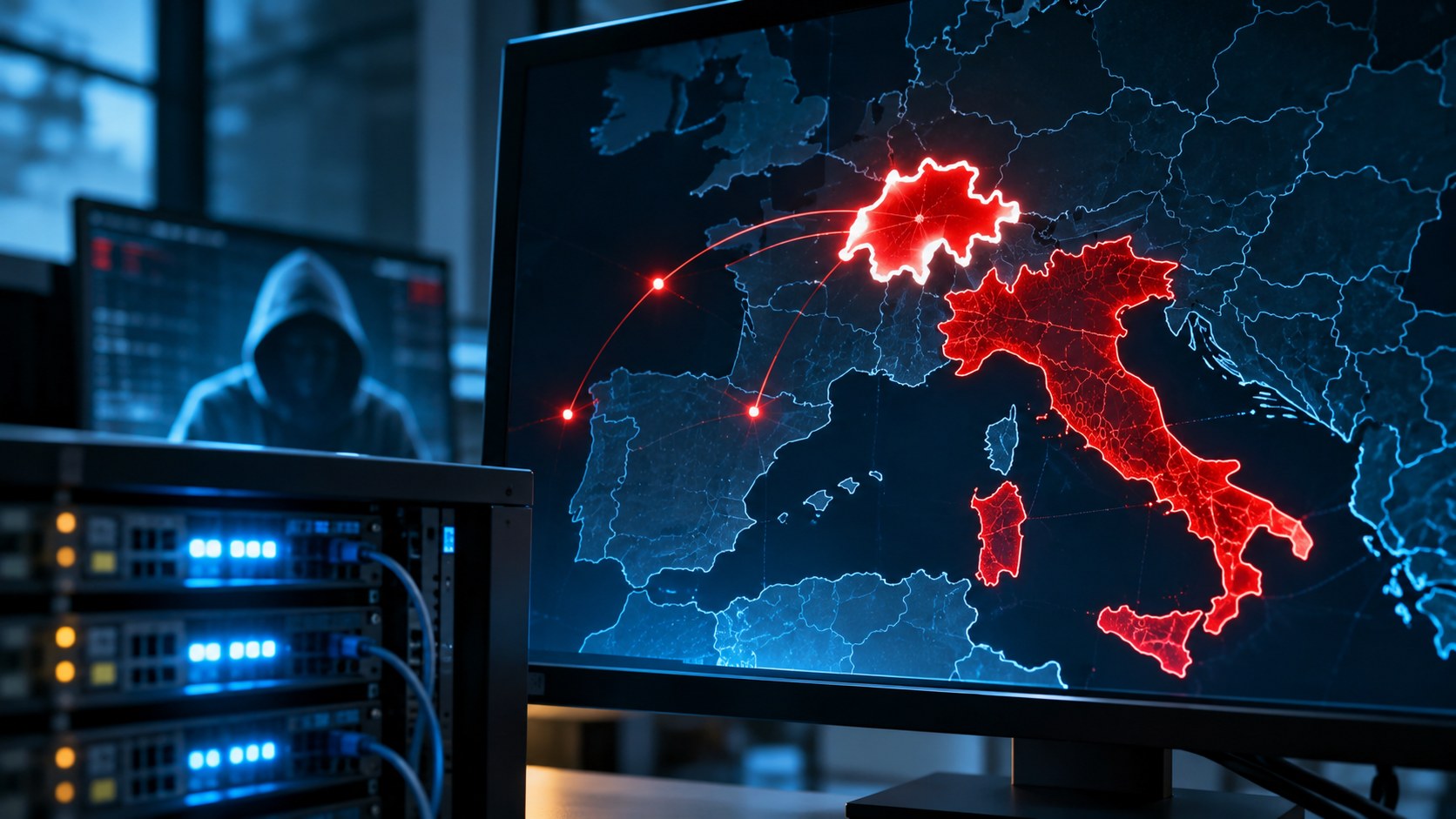
Cybersecurity agencies in Switzerland and Italy have warned of successful intrusions and automated campaigns involving AI agents. © Abijita Foundation

Cybersecurity agencies in Italy and Switzerland are warning that attackers are using artificial intelligence agents to carry out complex intrusions with limited human involvement, after Italian responders detected large-scale campaigns and Swiss officials confirmed successful attacks against organisations and critical infrastructure operators. Their alerts, issued on November 23 and 24, describe systems that can scan exposed networks, identify weaknesses, exploit misconfigurations and adapt their next steps as an attack unfolds.
Italy’s CSIRT said it had observed mass compromise campaigns in which autonomous agents worked across multiple attack stages and compromised large numbers of systems within a few hours. In one configuration involving the DeepSeek Harness framework in Red Team mode, six agents were assigned separate roles: one coordinator planned and distributed tasks, while five others handled information gathering, asset discovery, vulnerability identification, exploitation, and persistence. The agents could chain known vulnerabilities, configuration errors and stolen credentials, then use an exposed system as a foothold to reach internal networks.
The Italian bulletin named four frameworks seen in offensive campaigns: ARTEX, CyberStrikeAI, DeepSeek Harness – Red Team and PentAGI. It said the agents could keep working without continuous human input, adjust their actions in response to results and, in some cases, write malicious code in real time to evade endpoint security tools. The agency also warned that a compromised internet-facing application could become a route into systems that are not directly reachable from the public internet.
Switzerland’s National Cyber Security Centre said on November 24 that it had received its first reports of cyberattacks against Swiss organisations in which attackers used AI agents. Operators of critical infrastructure in at least two sectors were among those affected. The NCSC said every case known to it had resulted in a successful compromise of the victim’s IT systems. The attacks involved weak or easily guessed passwords and known vulnerabilities in internet-connected systems, with agents able to select tools, assess results and move on to other methods when they encountered defensive measures.
The Swiss agency said the number of AI agents available on the internet, including tools such as ARTEX and CyberStrikeAI, had almost doubled since October 2026. It warned that the speed of automated reconnaissance and exploitation leaves organisations with less time to identify suspicious activity and respond. The Italian CSIRT described campaigns in which agents operated in parallel and maintained continuous activity, making individual actions harder to distinguish from legitimate API calls, application logins or database access unless defenders examine the wider sequence of events.
Both agencies urged organisations to reduce the number of systems exposed to the internet and install security updates quickly, especially for vulnerabilities already known to be exploited. Switzerland’s NCSC said critical updates for internet-facing systems should be installed within 24 hours of release. It also recommended multi-factor authentication or passkeys for remote access, least-privilege permissions and monitoring for unusual changes in behaviour or data volumes. Italy’s CSIRT advised organisations to remove unnecessary management interfaces from public access, protect application identities and credentials, segment exposed systems and disconnect or isolate vulnerable equipment when it cannot be patched immediately.
If this article helped you, please consider supporting our work. Every small contribution keeps Abijita.com independent and running.

The alerts add specific evidence of successful intrusions to wider warnings about the use of AI in cyber operations. Abijita has previously reported on the UK National Cyber Security Centre’s warning about AI-driven cyberattacks and Unit 42’s findings on AI agents carrying out attacks at machine speed. Italy’s CSIRT has also published MISP threat-intelligence feeds containing indicators associated with the campaigns and says they are updated daily as the infrastructure used by attackers changes.