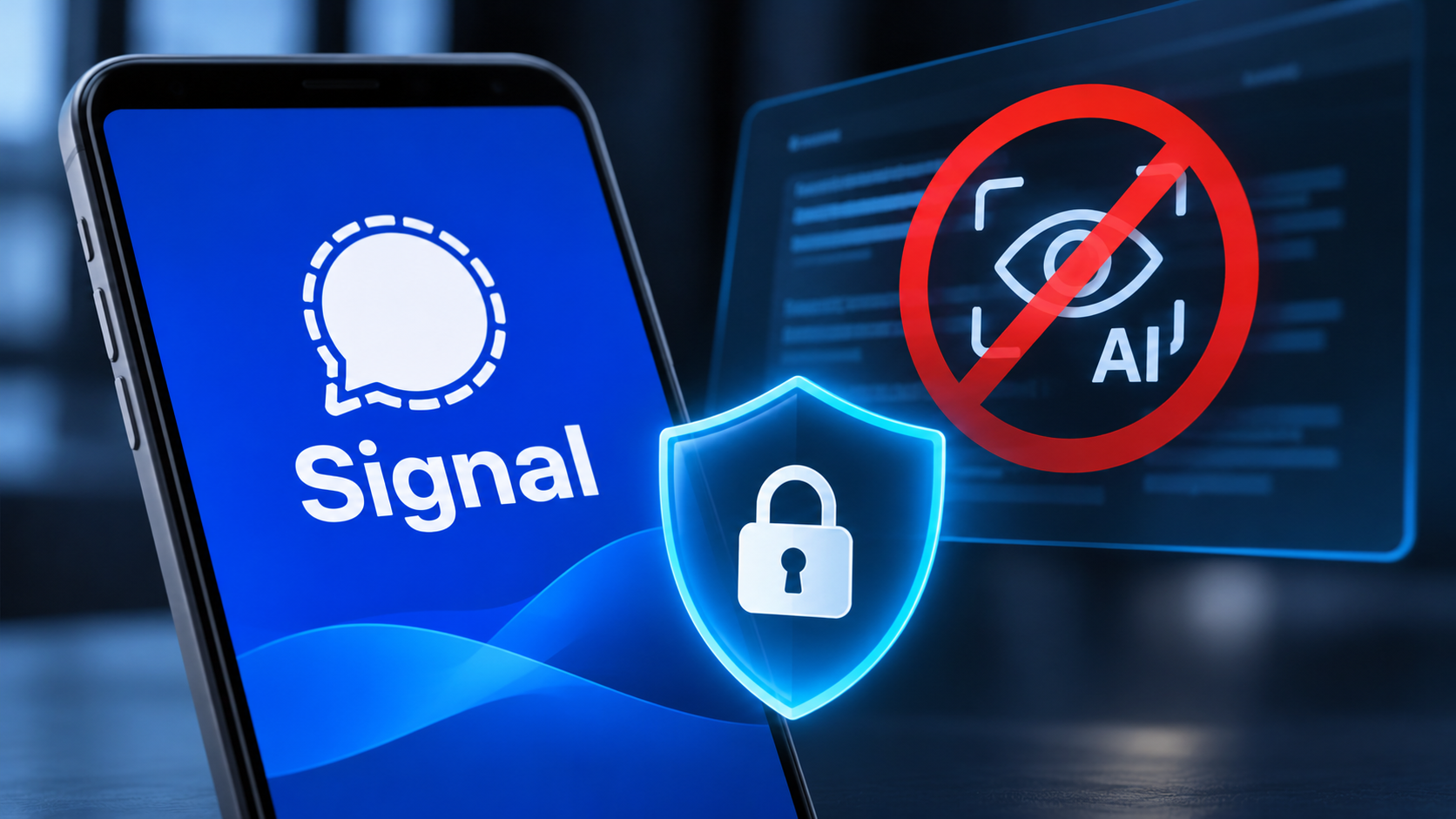


Signal is adding screenshot restrictions to its mobile app to stop operating-system AI assistants from capturing private chats. In a November 20 blog post, the company said it will block screenshots inside the app on iOS 27 and automatically turn on Screen Security on Android versions where it detects an AI assistant trying to read the screen. The announcement is described in Signal’s privacy update.
The changes target features such as Apple’s Onscreen Awareness in Siri AI and Google’s Gemini Intelligence, which can inspect on-screen content to respond to user requests. Signal says messages captured by these tools may be stored on the device or sent to remote services outside Signal’s control, even though the original conversations remain protected by end-to-end encryption. Users can disable the screenshot protection in Signal’s settings, but the company warns that doing so may expose both their messages and those of other participants.
Android support will vary. Signal says it cannot reliably detect screenshot attempts on every Android variant, so it will enable Screen Security when it detects an assistant accessing the screen rather than block all screenshots. It also cannot reliably block screenshots on macOS, leaving that platform outside the new protection.
The announcement follows Reuters’ reporting that Meta’s Muse agent accessed Signal message text during internal tests on Android and macOS using operating-system permissions. The tests did not show Muse breaking end-to-end encryption; they demonstrated how broad permissions can expose message content after it appears on a device. The earlier tests involving Meta Muse and Signal raised the same concern about access granted outside a messaging app’s own controls.
Signal is asking Apple, Google and Microsoft to give app developers a documented way to opt out of AI data access, including screen reading, notifications, file-system access and other operating-system frameworks. It also wants clearer technical documentation on how system-level agents collect and process app data. The company said file-system access can still expose content already stored on a device, so screenshot blocking does not cover every route.
If this article helped you, please consider supporting our work. Every small contribution keeps Abijita.com independent and running.