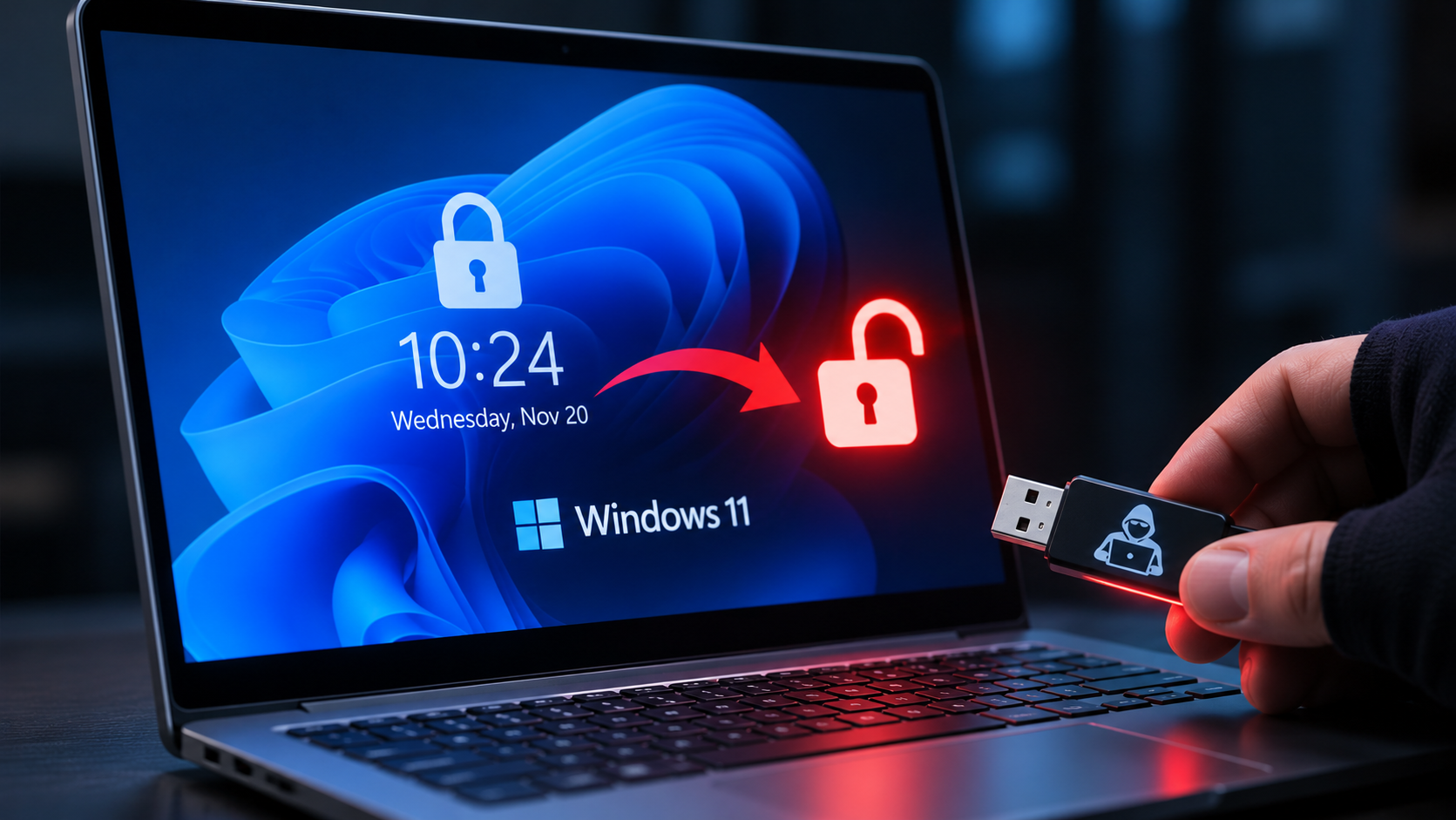
A newly disclosed Windows 11 lock-screen bypass called FastUnlock can let someone with physical access to a locked computer run programs without signing in, according to the researcher who published it and a test by endpoint-security firm ThreatLocker. The technique uses Windows Narrator during the Microsoft account recovery flow and reaches WsiAccount, a limited account that is not an administrator.
Researcher MSNightmare, also known as Nightmare Eclipse, posted a short demonstration on GitHub on November 19. ThreatLocker said it reproduced the method the same day and confirmed that code could be launched from the lock screen. Its test required physical access, a Microsoft account available through the recovery flow and navigation with Narrator using Caps Lock and the arrow keys.
The researcher said the technique worked on Windows 11 version 26H2 with the November security updates installed, but has not tested other Windows versions. Microsoft had not published an advisory or patch by November 20, and the technique has no assigned CVE.
FastUnlock has been described as a BitLocker bypass, but the proof of concept does not crack the encryption or recover a key. In common TPM-only configurations, the drive is already unlocked automatically before the Windows lock screen appears, so the technique targets a powered-on, locked system. ThreatLocker said a BitLocker pre-boot PIN helps protect a powered-off or hibernated device because it must be supplied before the drive unlocks.
The disclosure comes from the same researcher who previously released the YellowKey BitLocker zero-day, which Microsoft addressed with mitigation guidance in May.
If this article helped you, please consider supporting our work. Every small contribution keeps Abijita.com independent and running.