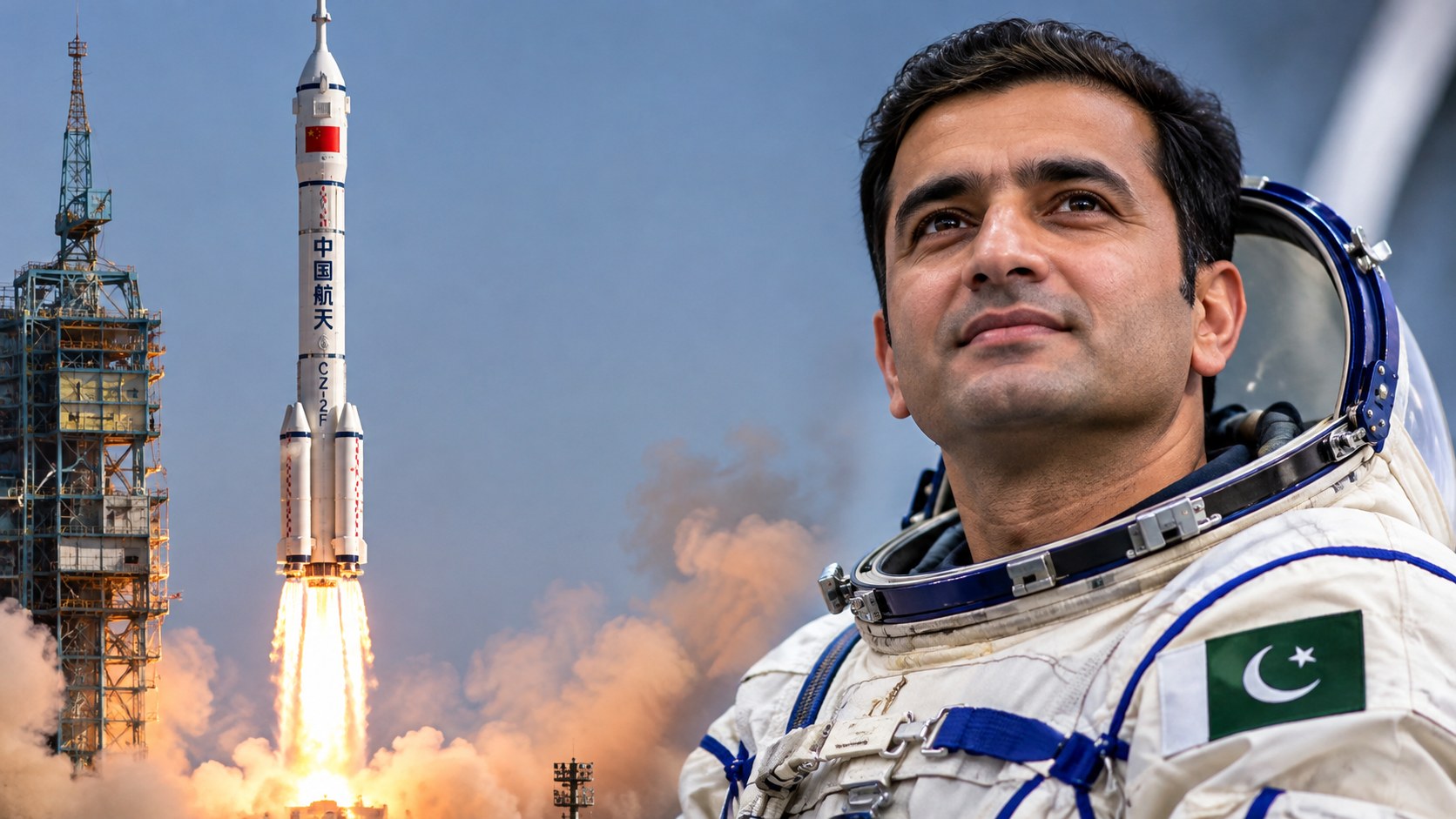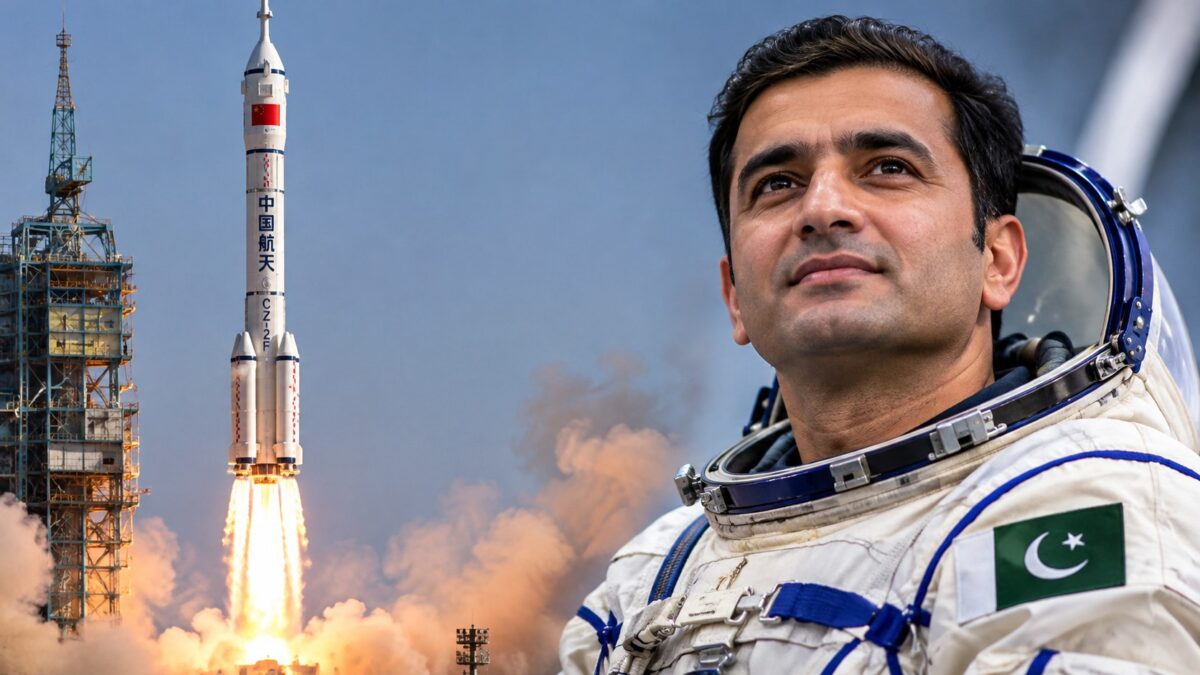

China has launched its Shenzhou-24 spacecraft carrying Pakistani astronaut Muhammad Zeeshan Ali, marking the first time a foreign astronaut has joined a crewed mission to the country’s Tiangong space station.
The spacecraft lifted off aboard a Long March-2F rocket from the Jiuquan Satellite Launch Center in northwest China at 8:18 a.m. Beijing time on November 25. It entered its planned orbit after launch and is heading for the Tiangong station.
Ali, a 40-year-old former Pakistan Air Force pilot, is flying as a payload specialist alongside Chinese astronauts Tang Hongbo and Wu Yi. His mission makes him the first Pakistani to travel into orbit and the first non-Chinese astronaut selected to visit China’s independently operated space station.
The flight follows a cooperation agreement signed by China’s Manned Space Agency and Pakistan’s Space and Upper Atmosphere Research Commission in February 2025. Ali and fellow Pakistani candidate Khurram Daud were selected for astronaut training in China in April 2026, with Ali ultimately chosen for the Shenzhou-24 mission.
Ali spent about seven months preparing for the flight, including training in spacecraft operations, emergency procedures, scientific experiments and Chinese-language communication. At a briefing before launch, he said he was carrying the hopes of Pakistanis with him into space.
During the mission, Ali will take part in joint China-Pakistan research in biotechnology and materials science. China’s space agency has identified four cooperative research projects, while Ali is also expected to conduct an in-orbit experiment involving photosynthetic cyanobacteria.
The Shenzhou-24 crew is expected to carry out around 90 scientific experiments and technology tests during the mission. Ali’s stay is planned to last approximately five to ten days, after which he is expected to return to Earth aboard the Shenzhou-23 spacecraft with two members of the station’s outgoing crew.
If this article helped you, please consider supporting our work. Every small contribution keeps Abijita.com independent and running.

China has been presenting Tiangong as a platform for international cooperation as it expands its human spaceflight programme. The station has been fully operational since 2022, and Beijing has said it aims to land astronauts on the Moon before 2030.