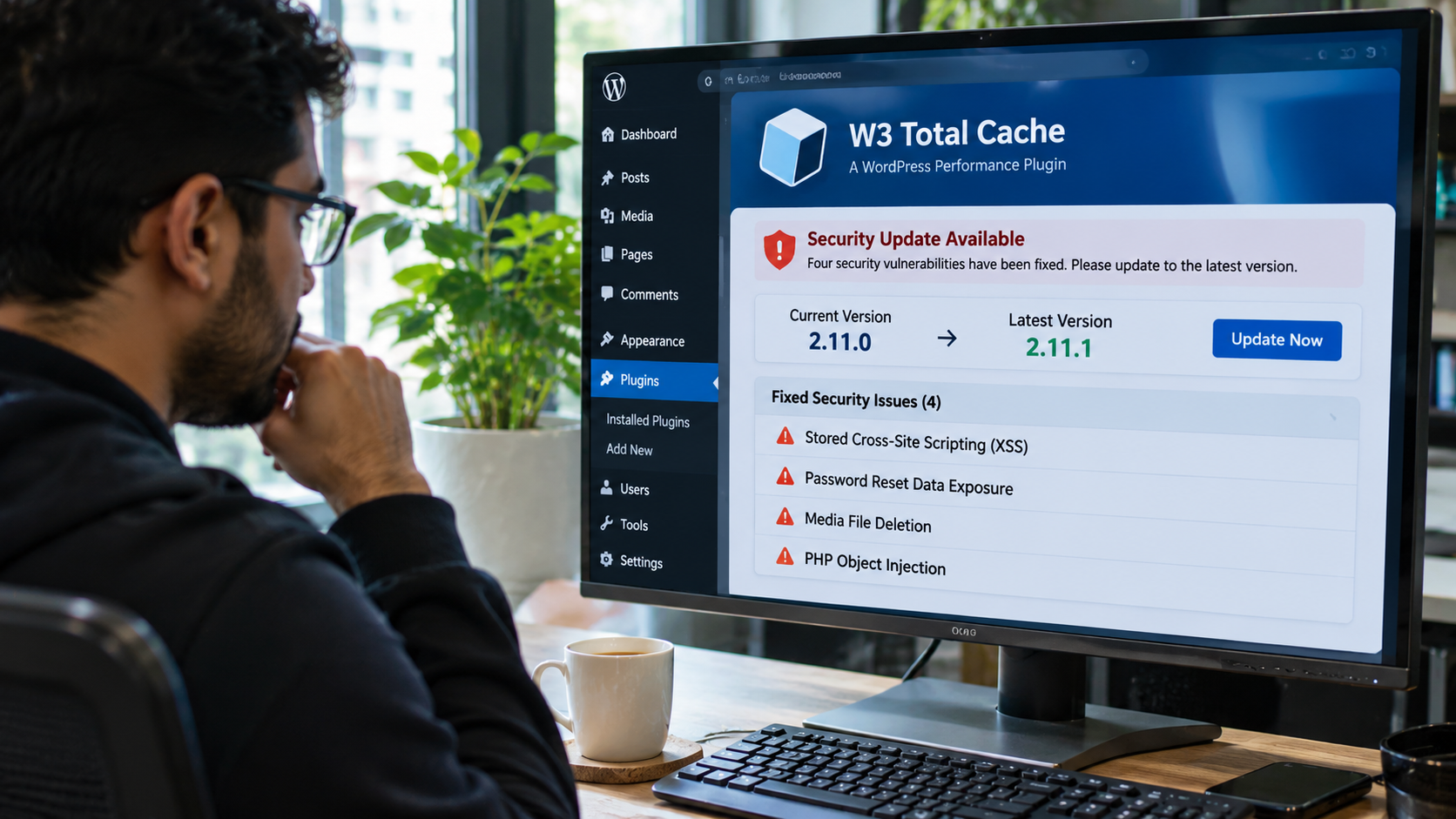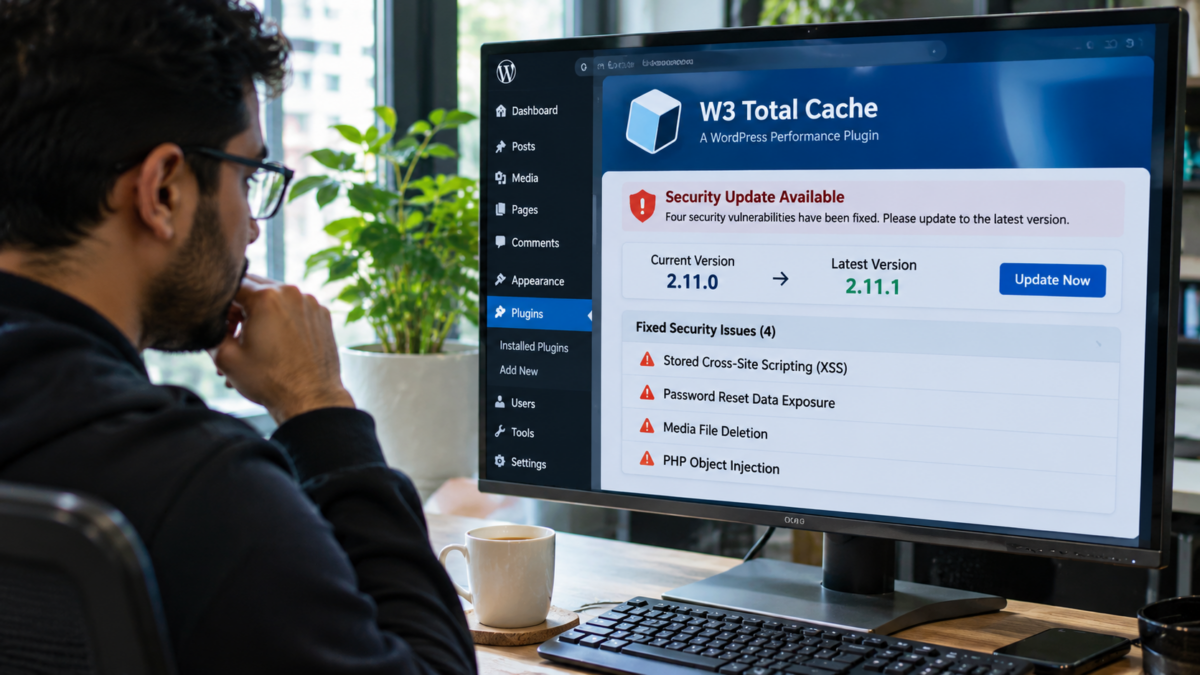

Four newly published vulnerability records affect the W3 Total Cache plugin for WordPress, with each listing versions up to and including 2.11.0 as affected. The issues cover stored cross-site scripting, exposure of password-reset information, unauthorized deletion of media files and PHP object injection that can lead to remote code execution.
The highest-rated issue is CVE-2026-119071, which carries a CVSS 3.1 score of 8.1. It allows an authenticated user with Author-level access or higher to delete media-library attachments belonging to other users. The flaw is in the plugin’s image-revert process, which can pass an attacker-controlled attachment ID to WordPress without checking that the file belongs to the user’s post.
CVE-2026-119072, rated 5.3, concerns password-reset information that can be exposed through cached reset forms. The issue requires particular page-cache settings, including caching URLs with query-string variables, and a victim visiting a specially crafted address while a password-reset cookie is active. CVE-2026-130318, rated 5.4, is a stored cross-site scripting flaw that can be triggered through comment content when the plugin’s CDN feature is enabled.
The fourth issue, CVE-2026-135616, has a CVSS score of 7.5 and involves PHP object injection through the Memcached object cache. It requires the object cache to use the Memcached method backed by the pecl memcache extension, with Minify enabled. An attacker with at least Subscriber-level access can exploit the key-collision issue to escalate privileges, inject an object and use a bundled Guzzle component to write files and execute code.
Wordfence assigned the four CVE identifiers and published their records on November 27. BoldGrid released W3 Total Cache 2.11.1 on November 26. The official WordPress plugin listing now identifies 2.11.1 as the current version. Its changelog includes changes to Memcached key handling, page-cache behavior, CDN processing and image-converter reverts, while the CVE records link to the vendor’s 2.11.1 code tag. The affected-version ranges in the records end at 2.11.0.
Abijita previously covered a separate W3 Total Cache security vulnerability. The four newly disclosed CVEs are different issues. Site owners running versions up to 2.11.0 should update to the current 2.11.1 release and confirm the installed version in WordPress.
If this article helped you, please consider supporting our work. Every small contribution keeps Abijita.com independent and running.