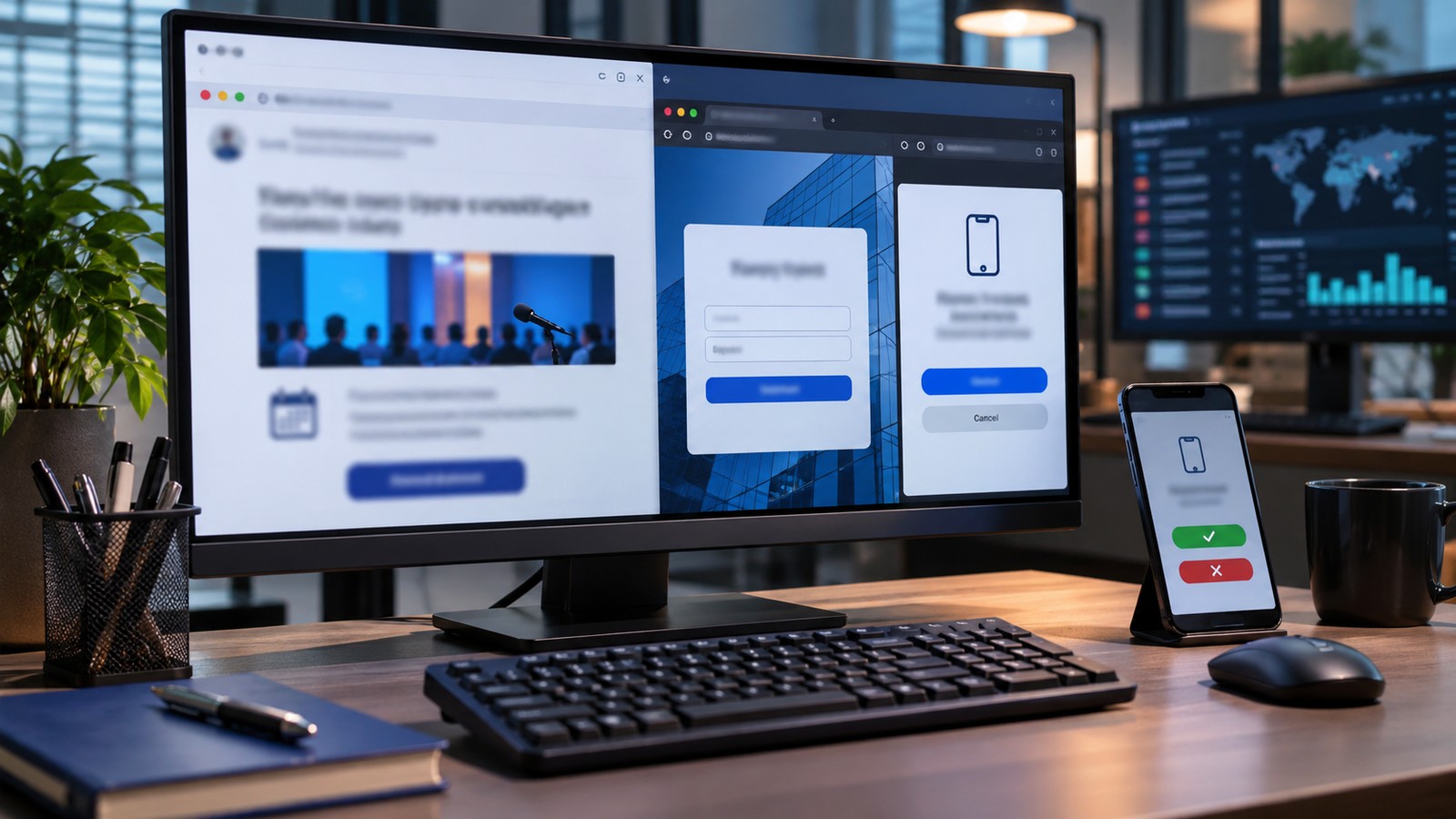
A phishing operation called GoodGuys is impersonating well-known companies with invitations to paid expert interviews, feedback studies and webinars in an effort to steal corporate Google and Okta credentials. The lures promise payments of up to $600 for a 45-minute interview, but recipients who follow the links are taken to fake branded pages that ask them to sign in with their work accounts.
Push Security says it has tracked the campaign since October 13 and identified pages impersonating eight brands: Accenture, American Express, Coca-Cola, Culver’s, Google Cloud, Nvidia, SpaceX and Spotify. BleepingComputer reported the findings on November 26. The operators have used legitimate email and event platforms, including HireVue, SendGrid, Mandrill and Cvent, to distribute links, making the messages less likely to look like ordinary spam.
The invitations are tailored to the company being impersonated. One Google Cloud-themed message, sent through HireVue, invited recipients to a webinar about putting AI applications into production. Other pages offered $500 for an Nvidia feedback study or $600 for an Accenture expert interview. The domains use interview, webinar and research wording, while the landing pages copy the branding of the company named in each invitation. Some links first present a CAPTCHA challenge before displaying the fake sign-in page.
GoodGuys is designed to collect credentials through forms controlled by the attackers rather than by relaying Google’s genuine login page through a reverse proxy. The phishing pages accept corporate Google addresses and reject consumer Gmail, Yahoo and Outlook accounts. After a victim enters a work email address and password, the site can display additional prompts for SMS codes, authenticator codes or Google’s number-matching sign-in approval.
The kit also includes fake Okta login pages and prompts for Okta Verify push approvals and authentication codes. Push Security believes an operator may be using the captured credentials to attempt a real sign-in and then directing the phishing page to show the same verification challenge to the victim. This means a person may believe they are completing a routine interview registration while actually helping an attacker pass the organisation’s authentication checks.
Researchers say the campaign’s infrastructure separates the public-facing landing pages from a backend that receives information entered by victims and tells the page which prompt to show next. The brand-specific landing domains have changed over time, while the backend infrastructure has been more consistent. Push Security also found hidden accessibility labels in the sign-in pages that refer to a “sign-in simulation.” The researchers suspect this wording may be a leftover from development with an AI coding assistant, but that does not establish how the phishing kit was created.
Push Security found a second campaign using fake Coca-Cola interview invitations and the Evilginx phishing kit to target Google Ads accounts. The two operations shared some branding material and an abused SendGrid click tracker, but differences in their code and infrastructure mean researchers have not confirmed that the same threat actor operates both campaigns. The GoodGuys investigation also does not establish how many accounts were successfully compromised.
Employees should treat unexpected paid interview or webinar invitations with caution, especially when the sender asks them to authenticate with a corporate Google or Okta account on a page reached through an email link. Verify the event through the organisation’s official website or a known contact, and do not approve an unexpected MFA prompt or provide a one-time code to complete an invitation. Security teams can warn staff about the specific lures, review suspicious sign-ins and identity-provider activity, and prioritise phishing-resistant authentication such as passkeys or security keys for high-value accounts.
The campaign is another example of attackers abusing trusted business services to make credential theft look like normal corporate activity. Abijita has previously covered social-engineering activity linked to ShinyHunters and corporate credential theft, including attempts to obtain single sign-on access through voice phishing. The GoodGuys operation uses a different lure, but it similarly relies on convincing employees to complete an authentication step that appears routine.
Sources: Push Security’s GoodGuys campaign analysis and BleepingComputer’s November 26 report.
If this article helped you, please consider supporting our work. Every small contribution keeps Abijita.com independent and running.