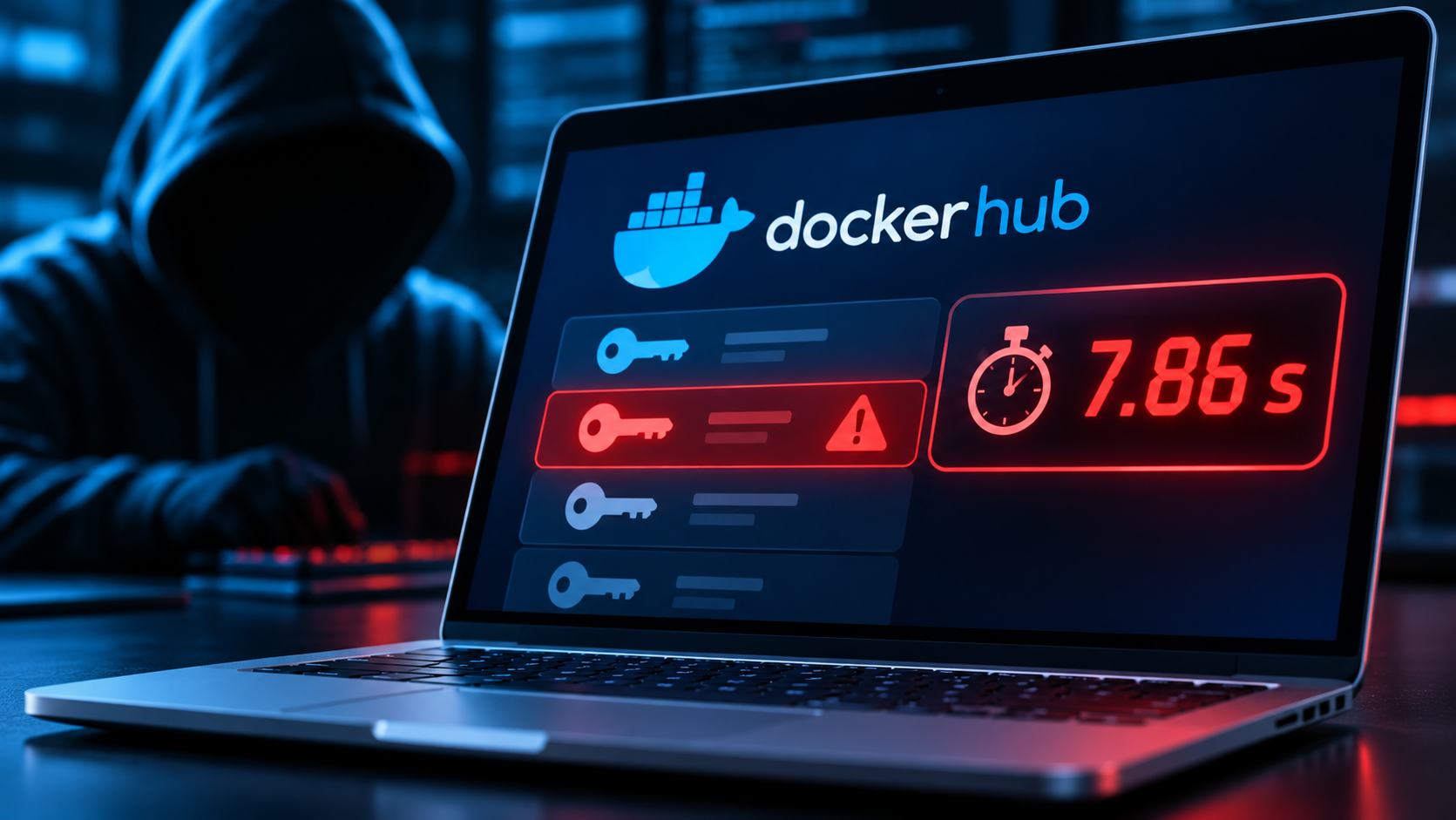

Automated scanners found and used test cloud credentials embedded in public container images in as little as 7.86 seconds after publication, according to a study by researchers at Stony Brook University. Billy Tsouvalas and Nick Nikiforakis published 300 instrumented decoy images across eight public container registries over four months to measure how quickly exposed secrets were discovered and used.
The images were pulled more than 75,000 times, and the planted AWS keys generated over 140,000 API calls from about 5,000 unique IP addresses. The fastest observed use of an AWS key came 7.86 seconds after an image appeared on Docker Hub. The median time to the first API call was 51.19 seconds, and all 100 planted AWS keys were used within 15 minutes, the researchers reported.
The experiment also included OpenAI and Anthropic API keys, along with decoy SSH and database credentials. The researchers said the exposed OpenAI and Anthropic keys were used to exhaust balances on their test accounts. Docker Hub accounted for nearly all AWS-related activity, although the researchers also observed some abuse involving images hosted on Harbor.
Most of the activity did not involve running the containers. Instead, the scanners extracted files from image layers or queried registry APIs to inspect their contents. The researchers grouped the automated scanners under the name ContainerBots, but said the traffic showed no evidence that all activity was coordinated by a single operator.
The researchers said they reported their findings to Docker in May and received an acknowledgment, but no further response. A smaller follow-up test in August showed no observable changes in the platform’s behavior. Their paper, “Gone in 8 Seconds: Uncovering Malicious Bots Operating on Public Container Registries,” was presented at the ACM Conference on Computer and Communications Security 2026 and is listed on Nick Nikiforakis’s Stony Brook research page and the project website.
The experiment used deliberately planted decoy credentials, so it measured how quickly automated systems harvested and tested exposed secrets rather than documenting a breach of named companies. The findings echo earlier reports of exposed credentials, including more than 9,300 exposed AWS keys that remained active and a campaign that stole CI secrets from more than 1,800 GitHub repositories.
If this article helped you, please consider supporting our work. Every small contribution keeps Abijita.com independent and running.


Bots Used Decoy Docker Hub Keys Within 7.86 Seconds